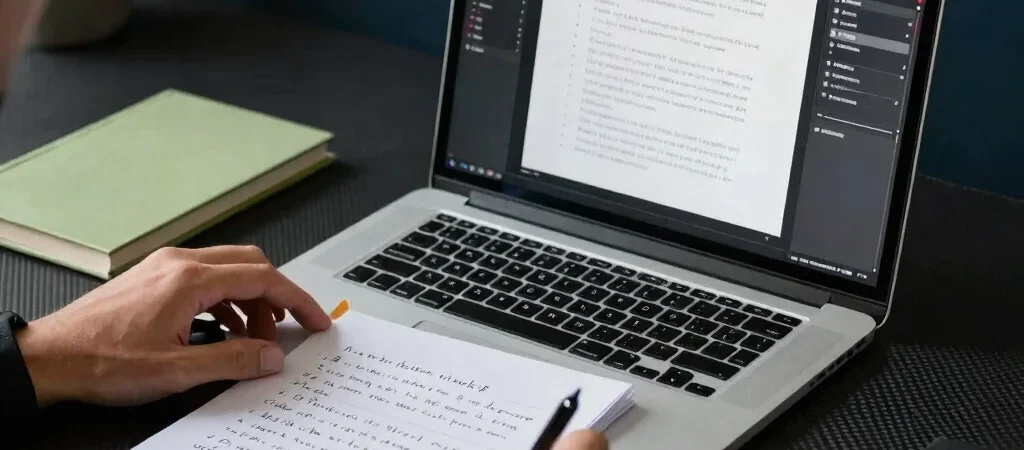
A blank outline can slow a video down before the camera is even on. An AI tool can help turn a rough brief into possible sections or questions to research, which is useful when the next step is still yours to choose. The best use is often a small, reviewable task—not handing over the whole creative process.
Give the tool a bounded task
Instead of asking for a complete expert script, try a prompt that names the audience, the viewer’s problem, and the limits of the output: for example, ask for five questions a beginner may have before trying a specific editing technique. Compare the suggestions with your own experience and reliable source material, then keep only the questions that genuinely belong in the video. A confident-sounding answer is still a draft to verify.
Keep sensitive material out
Before pasting footage transcripts, client notes, or unreleased ideas into an online service, check that tool’s data and privacy terms. Use a short, sanitized excerpt when the full material is not needed for the task. This keeps the experiment focused and avoids sharing details just because a prompt box makes it easy.
Review every creative choice
Read any generated outline aloud and remove sections that repeat themselves, invent details, or do not help the viewer complete the task. Check names, interface steps, and factual claims against current source material before recording. AI can offer a starting structure; you remain responsible for the final script, examples, and what the finished video tells its audience.